Cattle ranches need cameras at gates, pens, water points and equipment areas that sit far from power and Wi-Fi. EyeBuild cameras run on solar and battery, record Full HD and connect over cellular. In Arizona, rentals are installed for you. Anywhere in the US, including Arizona, EyeCore ships for self-installation with SIM, Wi-Fi or Starlink. Request a quote.
Quick facts
- Video
- Full HD
- Power
- Solar and battery
- Connections
- SIM / Wi-Fi / Starlink (EyeCore)
- Storage
- 30-day cloud storage
- Arizona
- EyeBuild or EyeGuard rental installed for you, or buy EyeCore
- Anywhere in the US
- EyeCore ships and is self-installed · Request a quote
What EyeCore gives you
- AI detection
- people and vehicles, not wind or animals
- License-plate reading
- allow / block lists, alerts on hits
- Night vision
- infrared, Full HD after dark
- Solar powered
- panel + battery, up to 14 days of battery backup, depending on conditions
- No wiring, no trenching
- nothing to run, nothing to dig
- Works without Wi-Fi
- 4G LTE; data included; no Wi-Fi required
- Full HD video
- live view and continuous 24/7 recording
- 30-day cloud storage
- timeline playback and clips
- Automatic time-lapse
- project progress, no setup
- Self-install in minutes
- ships anywhere in the US
- You own the unit
- buy once, no rental
- Multi-site dashboard
- every camera, one login
Request a quoteWhat a cattle operation needs to see
 A serene view of green orchard rows under a partly cloudy sky, showcasing agricultural beauty.
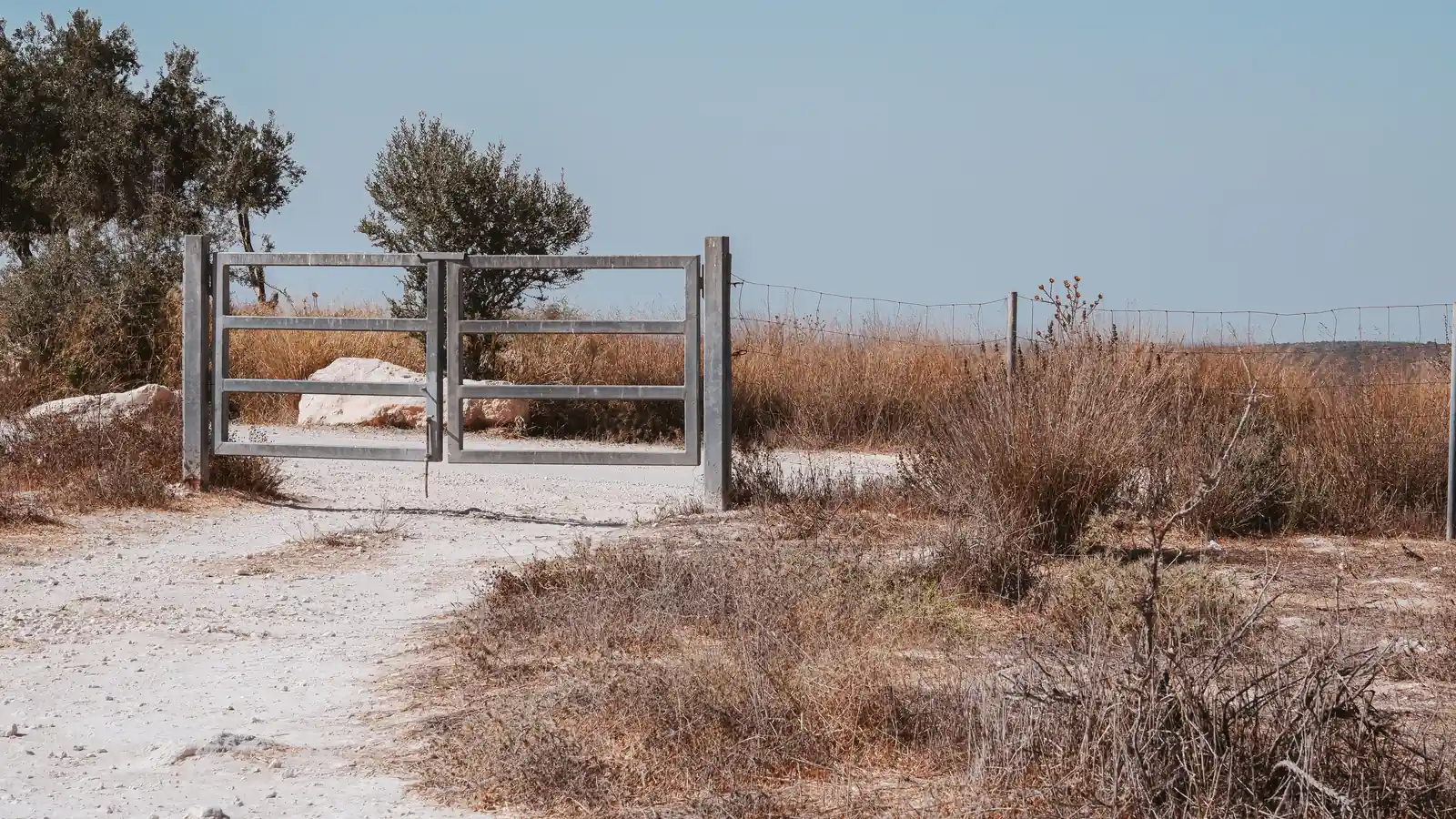
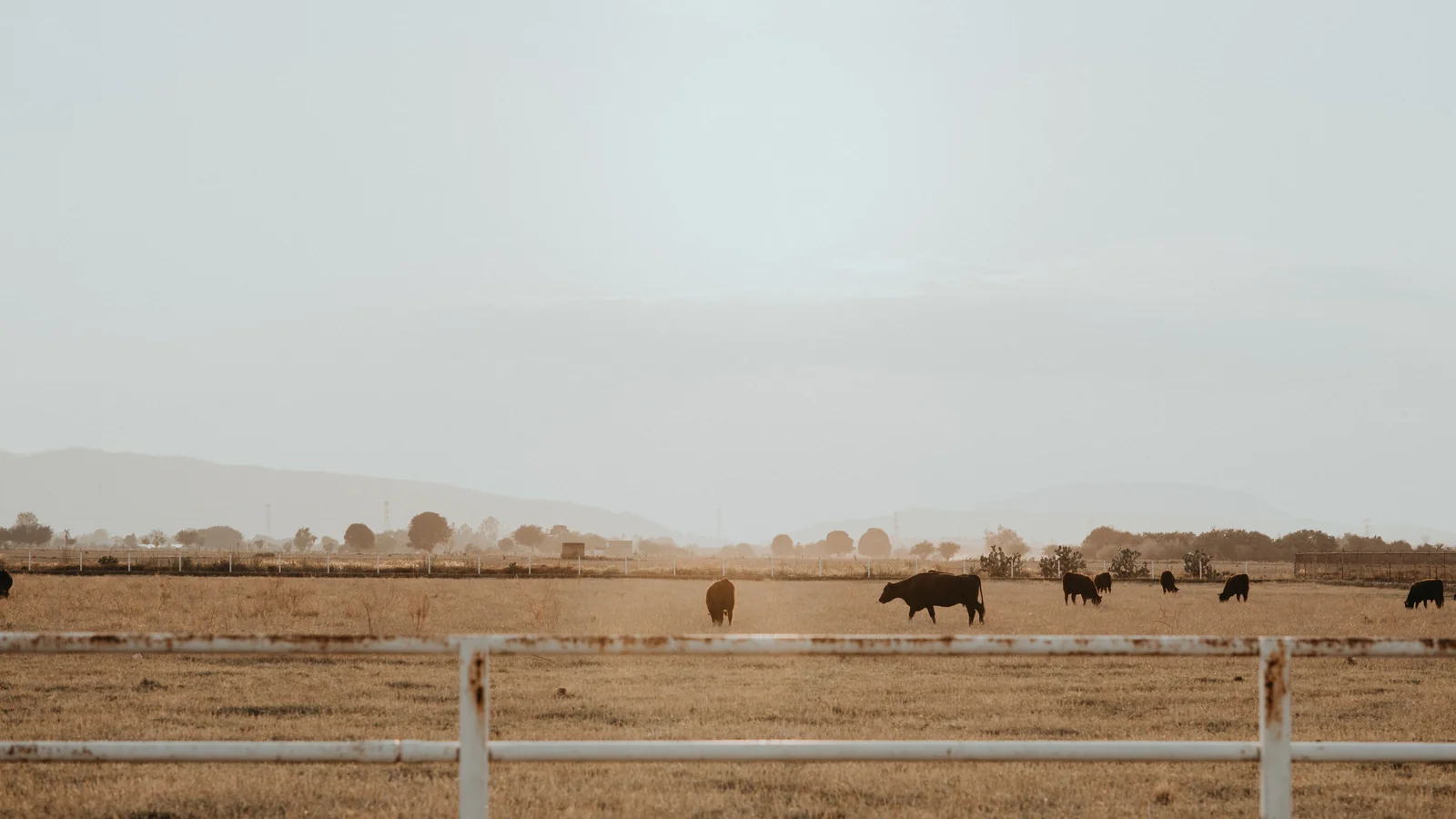
A cattle ranch spreads its value across a wide area: pens and alleys near headquarters, a squeeze chute and working facility, water troughs and wells in distant pastures, stock trailers, hay storage, fuel and the vehicles that move between them. People and vehicles still reach most of those places through a limited set of gates and roads. The useful camera plan follows those routes and concentrates on the few points where activity can be identified, rather than trying to watch open grazing land.
Typical priorities are the main entrance and any secondary gates, the working pens and loading area, the hay yard and fuel storage, and an equipment yard where tractors, side-by-sides and trailers are parked. A camera at a remote well or solar pump can be worthwhile when that equipment is costly or hard to replace, or when a water outage needs to be noticed quickly.
Placement around pens, water and equipment
 Construction equipment in Caltrain yard, September 2018
Mount cameras where livestock cannot reach them. Cattle rub on poles and fences, so set the mount outside the pen or high enough and braced so animals cannot knock it out of alignment. At loading areas, aim for a view of the trailer approach so vehicles are captured as they back in. At water points, a view of the access track is often more informative than a close view of the trough.
Check the solar panel's sky view through the seasons. Trees around headquarters, barn roofs and windbreaks can shade a panel in winter even when summer sun is fine. Plan for dust: working pens and dirt roads coat lenses and panels, so choose a spot you can reach safely for cleaning. Where wind is common, use a stable, well-anchored mount.
Alerts that reflect ranch activity
A working ranch has legitimate movement at all hours: feeding, calving checks, contractors and deliveries. AI detection focuses on people and vehicles, and detection zones let you ignore the county road or a pasture where cattle move constantly. Schedules help, for example alerting on the equipment yard only overnight. Expect to tune zones in the first weeks.
Decide who acts on an alert. With EyeBuild rentals and EyeCore, alerts go to your team in the app; with EyeGuard rentals in Arizona, a third-party monitoring center verifies alerts and can contact you or request dispatch if warranted. Agree in advance whether a night alert means checking live view, calling a neighbor or contacting the sheriff.
Arizona ranches and ranches elsewhere
In Arizona, EyeBuild and EyeGuard are rentals that EyeBuild installs. Same-day installation is available for Arizona rentals, subject to scheduling and location. Monthly rates and month-to-month terms are on the pricing page, plus the one-time installation charge listed there.
Anywhere in the US, including Arizona, EyeCore is camera ownership. It ships to you and is self-installed, is solar-only, records continuously 24/7 in Full HD, keeps 30 days of cloud storage and includes AI alerts and license plate recognition. Hardware, software plan and cellular data plan are billed separately, and pricing is provided by quote.
Connectivity on grazing land
 A communication tower in a rural field with a clear blue sky.
Cellular coverage often changes across a ranch with terrain. Test signal at the actual mounting location, since a phone that works at headquarters says little about a distant gate. The FCC National Broadband Map shows reported coverage, but provider maps are not a guarantee. For EyeCore, Wi-Fi is an option near buildings with a reliable network, and Starlink can serve a location with a clear sky view if it has its own power and service.
Planning checklist for a cattle ranch
Before requesting cameras, walk the property with a map and mark every gate, cattle guard and two-track that vehicles use. Mark the pens, loading area, hay and fuel storage, equipment yard and any remote wells or pumps. Rank them by value and by how hard it would be to notice a problem without a camera. The top two or three are usually the starting point.
For each candidate spot, note the direction of the morning and afternoon sun, any trees or structures that could shade a panel, how livestock move past it and whether you can reach it safely with a ladder or lift. Check your phone's signal at the spot as a rough first test. Decide who on your team receives alerts, at what hours, and what action each person takes. Share that plan with family members and hands so nobody is surprised by a call at night.
Review the plan after the first month. Move or re-aim a camera if it produces frequent alerts that nobody acts on, or if a route you did not expect turns out to be busy. Seasonal changes such as calving, shipping or hunting season may justify temporary adjustments to zones or schedules.
Arizona rental or EyeCore ownership
| Question | Arizona property | Property anywhere in the US |
|---|
| Product | EyeBuild or EyeGuard rental | EyeCore ownership |
|---|
| Installation | Installed by EyeBuild; same-day installation available for Arizona rentals | Ships to you; self-installed |
|---|
| Pricing | Published monthly rental rates | Request a quote |
|---|
| Alert review | Your team (EyeBuild) or third-party monitoring center verification (EyeGuard) | Your team reviews alerts in the app |
|---|
| Connection | Built-in cellular | SIM, Wi-Fi or Starlink |
|---|
Agriculture · Energy and utilities · Ranch guide · Pricing · National directory
Frequently asked questions
Can cameras watch an entire pasture?
Not practically. Cameras work best at gates, roads, pens and equipment areas where people and vehicles can be identified.
Will cattle trigger alerts?
AI detection focuses on people and vehicles, and detection zones exclude busy pasture areas. Some adjustment after installation is normal.
Do I need power at a remote water point?
No. The cameras use solar and battery power. Confirm the panel has a clear sky view and that the location has usable connectivity.
Does EyeBuild install outside Arizona?
No. Anywhere in the US, including Arizona, EyeCore ships for self-installation. Request a quote.
Who reviews alerts?
Your team, for EyeBuild rentals and EyeCore. EyeGuard rentals in Arizona add third-party monitoring center verification.
Is pricing published?
Arizona rental rates are on the pricing page. EyeCore is quote-only.
Sources & photo credits
- Photo: Austin Sullivan, Pexels License, via Pexels. Cropped and converted to WebP.
- Photo: Thomas P, Pexels License, via Pexels. Cropped and converted to WebP.
- Photo: Pi.1415926535, CC BY-SA 3.0, via Wikimedia Commons. Cropped and converted to WebP.
- Photo: Ann Perkas, Pexels License, via Pexels. Cropped and converted to WebP.
- Photo: Brunxs, Pexels License, via Pexels. Cropped and converted to WebP.
- Photo: Vladimir Srajber, Pexels License, via Pexels. Cropped and converted to WebP.
- Photo: USDAgov, Public domain, via Wikimedia Commons. Cropped and converted to WebP.
- Photo: Hayden Soloviev, CC BY 4.0, via Wikimedia Commons. Cropped and converted to WebP.
- Photo: Dietmar Rabich, CC BY-SA 4.0, via Wikimedia Commons. Cropped and converted to WebP.
- Photo: Greg N, CC BY-SA 3.0, via Wikimedia Commons. Cropped and converted to WebP.


